
Recycling
Responsible Waste Management at Gondwana Lodges
Waste Management
Commitment to Sustainable Waste Management
Gondwana Collection Namibia is dedicated to responsible waste management, focusing on waste classification, reduction and recycling to promote a circular economy.
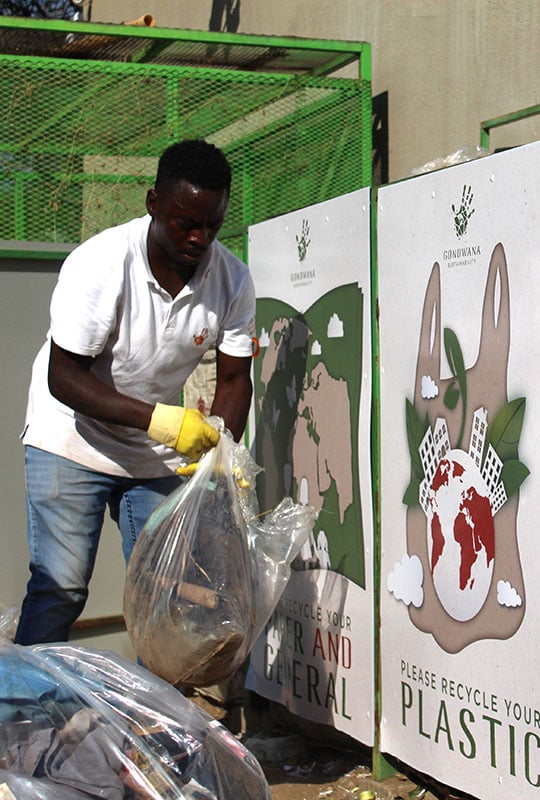
Waste from Gondwana lodges is meticulously separated by material type: glass is crushed and sheet metal is pressed. In partnership with Rent-A-Drum, we ensure environmentally sustainable disposal – the bulk of our waste is recycled, and the remainder is used to produce refuse-derived fuel.
In 2018, Gondwana and Rent-A-Drum launched the #ItsUp2Us campaign, aimed at ensuring only biodegradable waste ends up in landfills and raising environmental awareness among all Namibians.
Our Vision
Sending no waste to landfill
Gondwana strives to minimise waste and promote recycling, repurposing and biodegradation across all its operations. With a clear vision of sending no waste to landfills, we limit the use of non-recyclable materials and are eliminating single-use plastics from our restaurants, bars and lodge rooms – setting a standard for sustainable practice in hospitality.
At the core of these efforts is a robust waste management plan. Each establishment sorts and stores its waste in a dedicated waste management facility before it is transported to recycling centres, where Rent-A-Drum ensures it is handled in an environmentally friendly way.
Filtered water dispensers at our lodges replace plastic water bottles and encourage guests to refill their own. The Kalahari Anib Lodge dispenser served over 2,700 servings of 500 ml water in 2023, up from 2,200 in 2022.
Growing more produce in our lodges’ food gardens provides fresh ingredients for the kitchens and reduces the need for single-use plastic wrapping, further minimising waste.
The Windhoek head office contributed 300 kg of the 683 kg of e-waste recycled – old computers, printers and telephones. Recycling it prevented approximately 984 kg of CO₂ emissions from being released into the atmosphere.
From transforming glass bottles into decorative items to using recycled and repurposed materials in construction projects, our teams are constantly innovating to minimise waste, and we encourage every lodge to find creative ways to repurpose and upcycle.
Circular Economy
A partner for every kind of waste
We work with specialised Namibian recyclers so that even unconventional waste gets a second life.
-
Rent-A-Drum
General and recyclable waste
Separated waste from every lodge is collected and processed. The bulk is recycled, and the remainder is used to produce refuse-derived fuel.
Recycling and refuse-derived fuel -
BEE Biofuel Namibia
Used cooking oil
Used cooking oil from Gondwana properties is recycled to produce waste-derived fuel.
Waste-derived fuel -
OilTech Namibia
Used engine oil and oil filters
Used engine oil and old oil filters are upcycled into firelighters – which our lodges buy back from OilTech, closing the loop.
Firelighters, bought back by our lodges -
NamiGreen
Electronic waste
E-waste and printer cartridges from Gondwana properties are recycled and repurposed by this Windhoek-based e-waste recycler.
Recycled and repurposed electronics
Waste Reduction Achievements
Less to landfill, more recycled
Measured year on year against our goal of sending no waste to landfill.
Waste sent to landfill
The share of our waste sent to landfill fell from 35% in 2020 and 2021 to 25% in 2022. Despite a slight rise to 30% in 2023, we remain committed to reducing it to 20% by 2024 – and, ultimately, to zero.
Here, a shorter bar is better: every percentage point is waste recycled, repurposed or turned into fuel instead.
- 2020 35%
- 2021 35%
- 2022 25%
- 2023 30%
- 2024 target 20%
What we recycled in 2023
- 2,112litres of used cooking oil – up from 625 litres in 2022
- 683kg of e-waste – up from 109 kg in 2022
- 178cartridges of printer ink – up from 91 in 2022
- 2,338kg of recycled firelighters bought – up from 630 kg in 2022
The 2,112 litres of cooking oil include 855 litres from The Weinberg Windhoek. E-waste and cartridges were recycled with NamiGreen; firelighters are made by OilTech from used engine oil and filters.
Strategic objectives for responsible waste management
-
Consumption
Responsible consumption
Limiting non-recyclable materials from the moment they enter our lodges.
-
Single use
Eliminate single-use waste
Removing single-use plastics from our restaurants, bars and lodge rooms wherever feasible.
-
Recycling
Efficient waste management and recycling
Sorting at source, dedicated facilities at every lodge, and partners for every waste stream.
#ItsUp2Us: regular clean-ups and awareness programmes at our lodges and Windhoek head office keep Namibia clean.
In the Kitchen
Sustainable kitchen practices
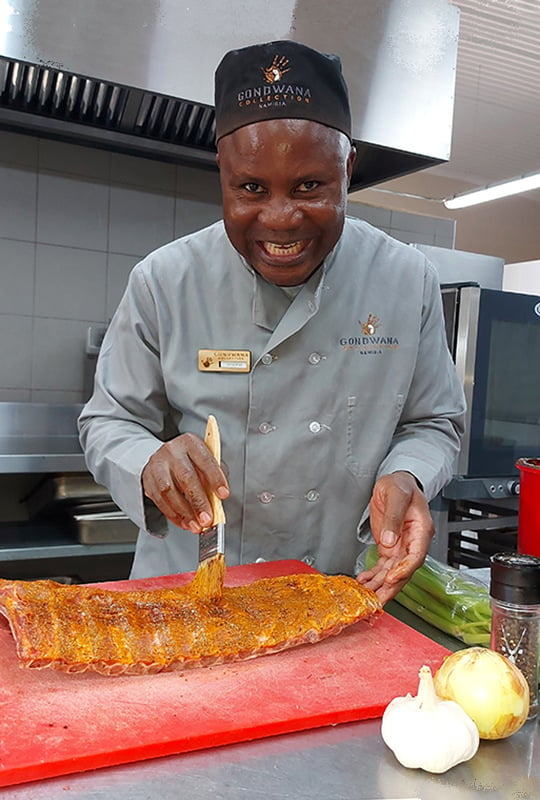
Each day begins with careful planning, as chefs and the kitchen team meet to discuss the menu. Accounting for every ingredient minimises excess and makes the most of quality food – thoughtful preparation is the first step in reducing waste.
Sorted at source
Not every scrap can be saved, so our kitchens sort remnants into three categories: compost, non-compost and feed for pigs, with clear signage guiding the team. The Weinberg Windhoek sends its food waste to Moonraker Outdoor Adventure Camp as pig feed – 19,500 kg of kitchen waste in 2023.
Donated, not discarded
Quality food that has not been used after service is donated to the Gondwana Care Trust, which distributes it to supported projects close to our lodges – reducing food waste while supporting local communities.
Reducing Single-Use Plastics
Single-use plastic items are gone from our restaurants and bars wherever feasible. Here is what replaced them.
-
Drinking water
Filtered water dispensers
Dispensers replace plastic water bottles, and guests refill their own reusable bottles instead.
-
Restaurants
No more mini butter portions
Mini foil and plastic butter portions have been eliminated from our restaurants.
-
Bars
Paper straws
Paper straws are used at all Gondwana lodges.
-
Lunch packs
Eco-friendly packaging
Lunch packs use eco-friendly packaging and wax paper wrapping instead of plastic.
-
Guest rooms
Glass coffee jars and plungers
Coffee sachets have been replaced with glass coffee jars and stainless-steel plungers.
-
Guest rooms
Stainless steel sugar canisters
Refillable stainless steel sugar canisters are provided for guests in place of single-use sachets.
Looking ahead
Our lodges in the Zambezi and Karas regions are the furthest from waste management centres. Finding workable ways to transport their waste is a priority, so that every lodge’s waste is handled responsibly.
We continue to improve our waste management practices, explore innovative solutions and strengthen our partnerships with local waste management organisations – protecting Namibia’s natural resources and inspiring guests and communities to do the same.
Gallery
Waste Management Map
Waste management and recycling initiatives at Gondwana lodges across Namibia.