
Okaukuejo Live Stream
About the Okaukuejo Live Cam
Embark on a journey unlike any other as we transport you straight to the heart of Etosha National Park, where the magic of Namibia's wilderness unfolds before your very eyes, 24/7. Our live webcam serves as your exclusive portal to the legendary Okaukuejo Waterhole, a beacon of life in the arid landscapes of the park. Witness nature's drama unfold under the vast Namibian sky, bathed in the gentle glow of floodlights.
GPS coordinates:
-24.074923, 15.887410
Animals in the area
While the kaukuejo is arid and water is scarce, many animals have successfully adapted to live and thrive in this climate. Within the Namib Sand Sea habitats and micro-environments, visitors may find:
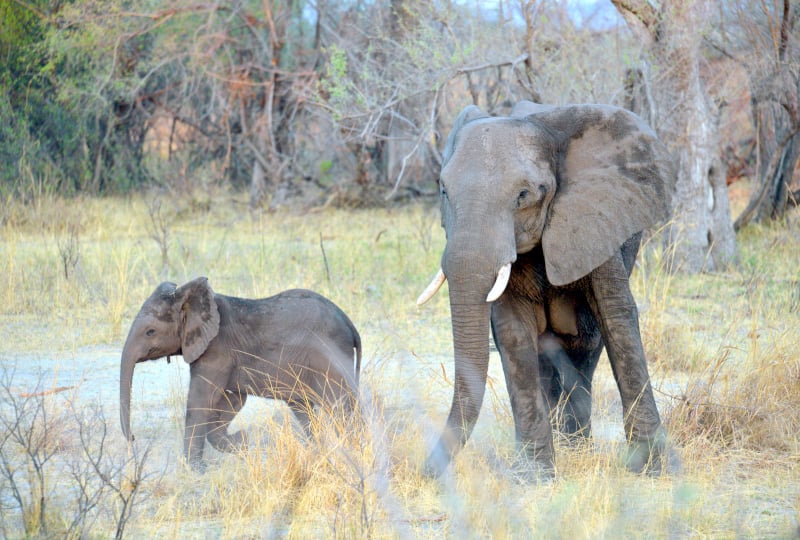
Elephant
The elephant (Loxodonta africana) is the world's largest land mammal. All the elephants found in Namibia are African elephants which live in small families of between 10 and 20 animals.
learn more →/23-06-16%20rhinoceros%20black%20gemsbokvlakte%20etosha%20-%20wikipedia%2012-01%20cut%20web%20850%20x%20567.jpg)
Black & White Rhino
here are five species of rhinoceros, two of which live in Africa: the black (Diceros bicornis) and the white (Ceratotherium simum). They are almost the same bluish-grey colour and are sometimes known as hook-lipped (for the black) and square-lipped or wide (for the white).
Read more →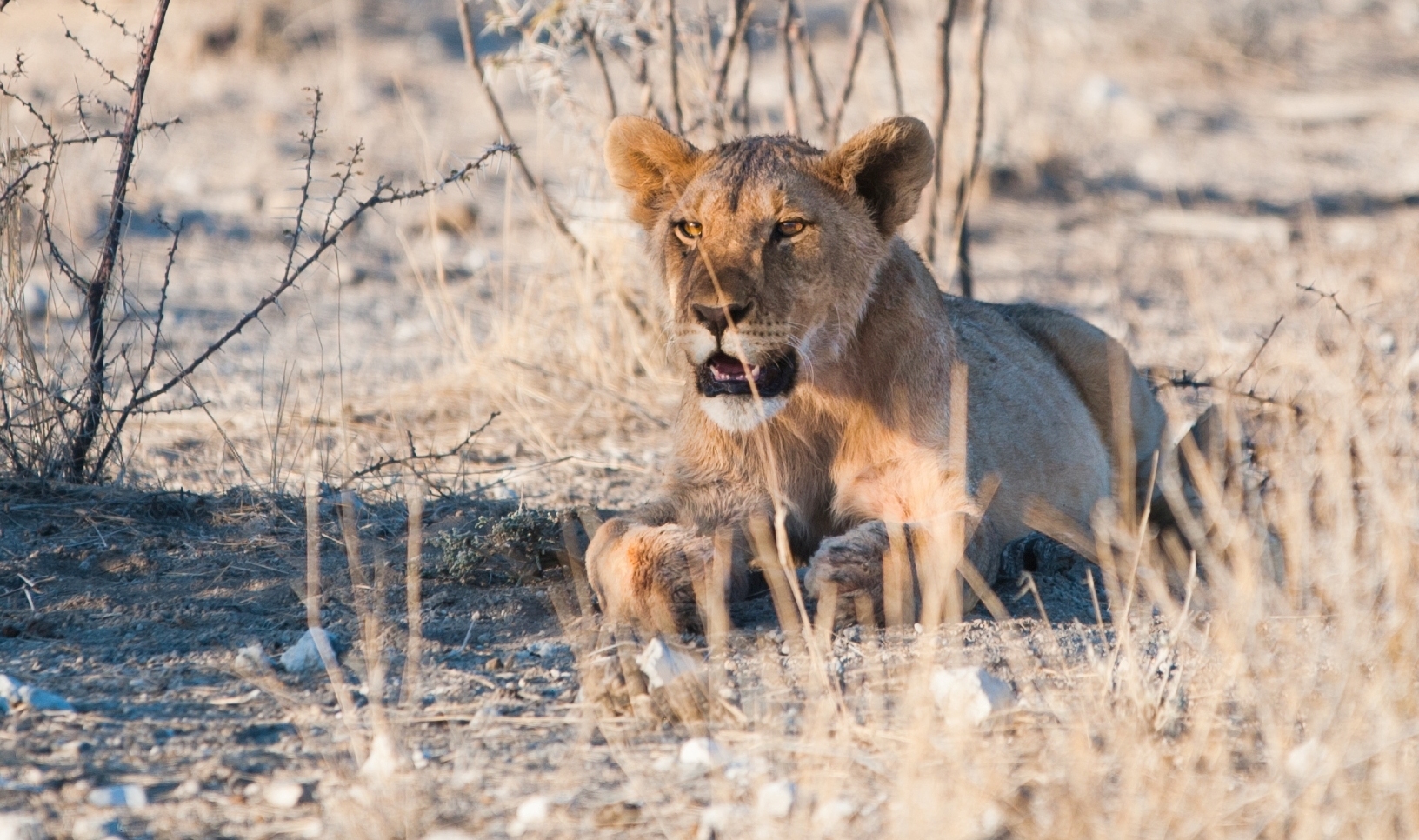
Lion
Lions are great wanderers and spend much of their time hunting, patrolling territories, playing and sleeping. Although they live in prides of up to 30, comprising between 4 and 12 related females, it is the lionesses that remain in the pride for life.
Read more →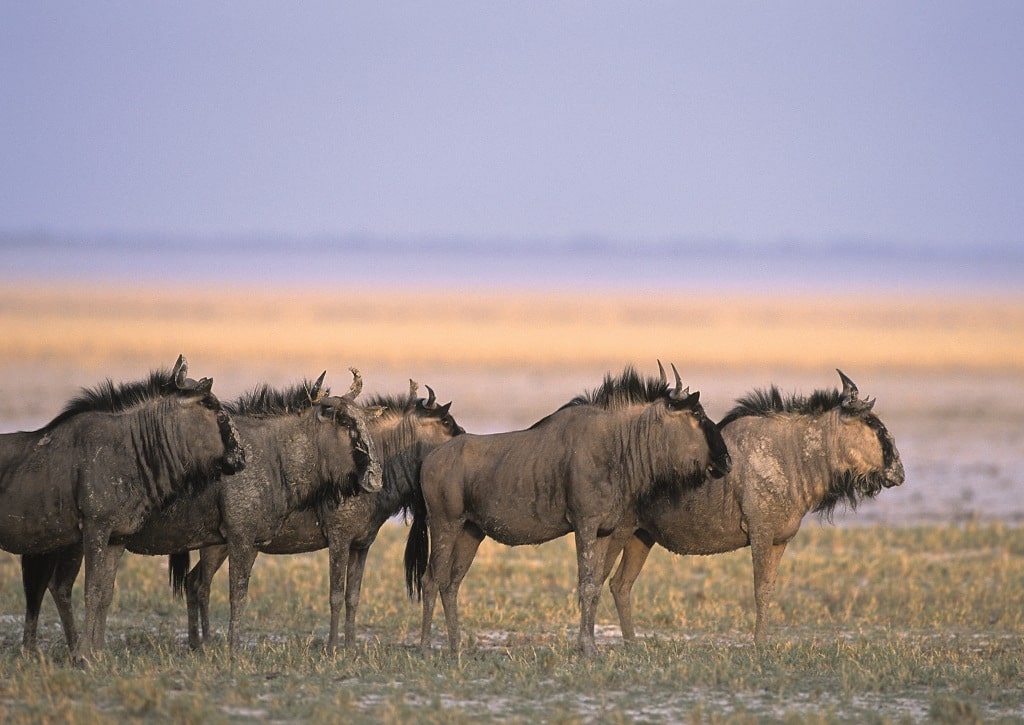
Gnu / Blue Wildebeest
The Blue Wildebeest or Gnu (Connochaetes taurinus) is one of two species of Wildebeest and stands tall at 1.4 meters at the shoulders and 2.4 meters long from head to tail. At 200kg, both male and female have curving horns. It has a grey coat, black mane and black beard.
Read more →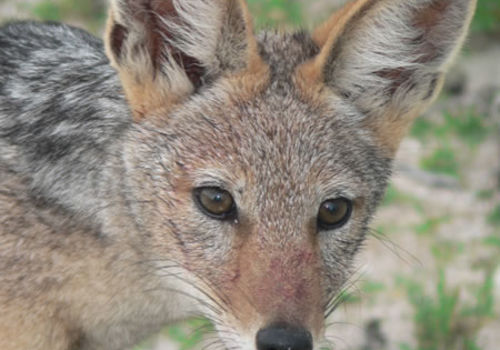
Black Backed Jackal
The Black-backed Jackal (Canis mesomelas) is a medium sized and dog-looking, with black fur that is sprinkled with white fur on its back which is wider at the neck and shoulders and thins out towards the tail. Almost like a saddle. It has white fur around the lips and down the throat and chest.
Read more →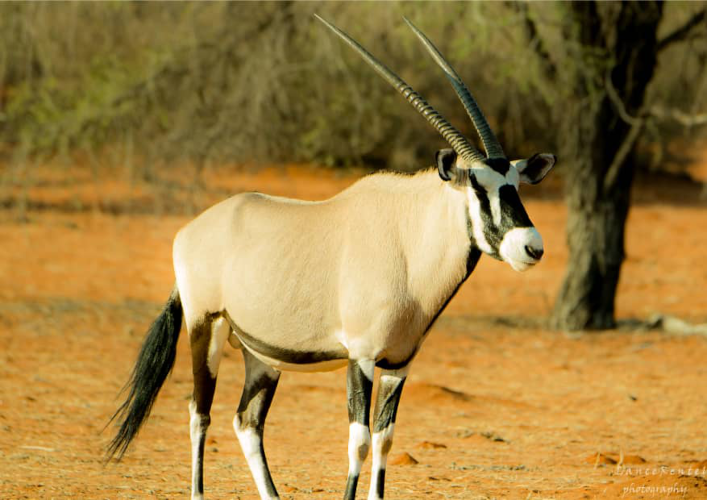
Oryx
Gemsbok (Oryx gazella) is the common name for the most well known and largest of the 3 oryx species. Their coat is a light brown/grey color and the top of their legs are black. They have a dark strip extending from their chin, down their neck and also along their shoulder joints.
Read more →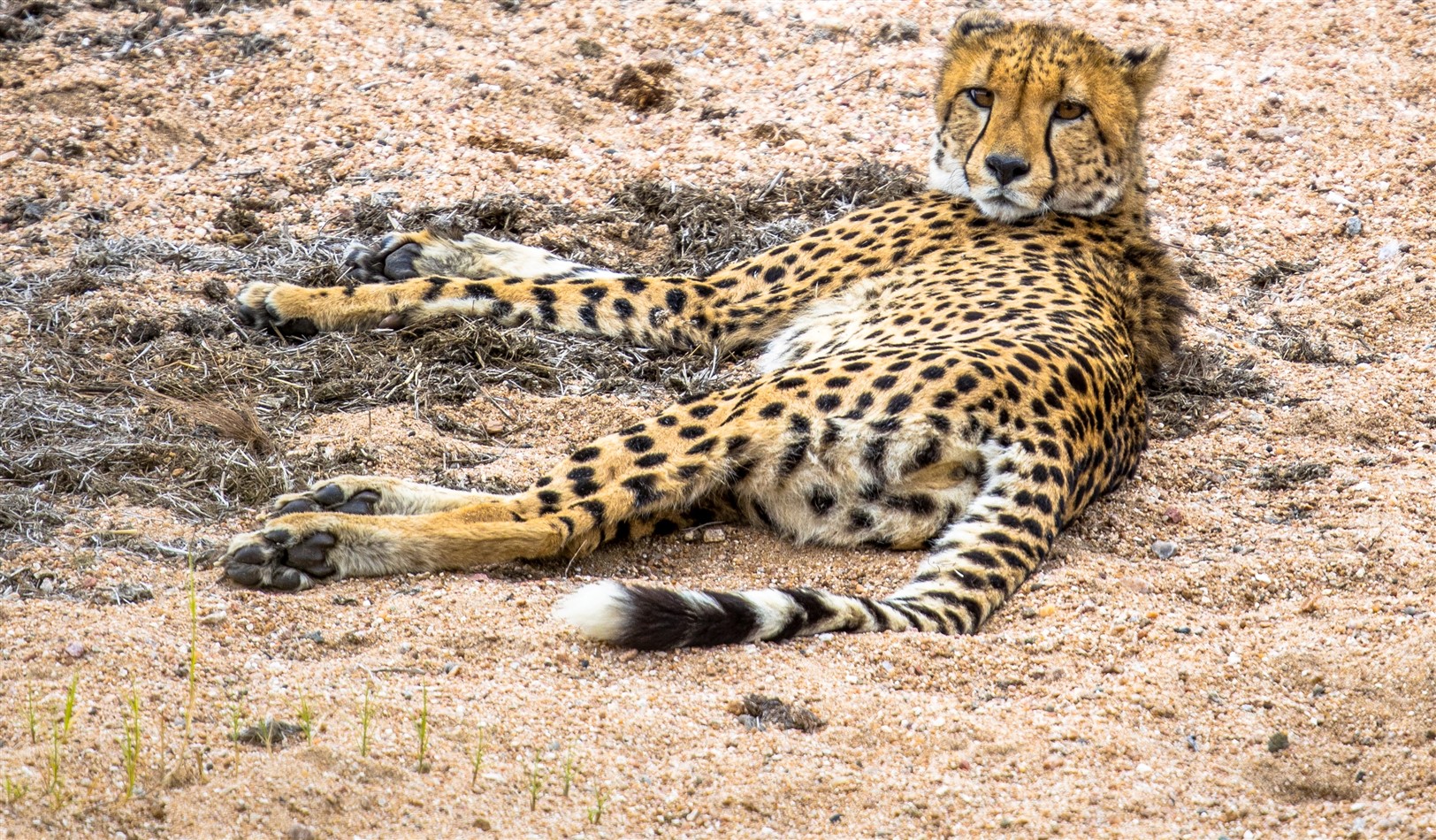
Cheetah
The Cheetah’s (Acinonyx jubatus) slim body, long legs, small tail and long tail is built for speed and they can reach a speed of 120km/h. The body is covered in black spots with the last third of the tail having black rings. A distinguishing marker are the “tear tracks” that run from the corner of the eye past the side of its mouth.
Read more →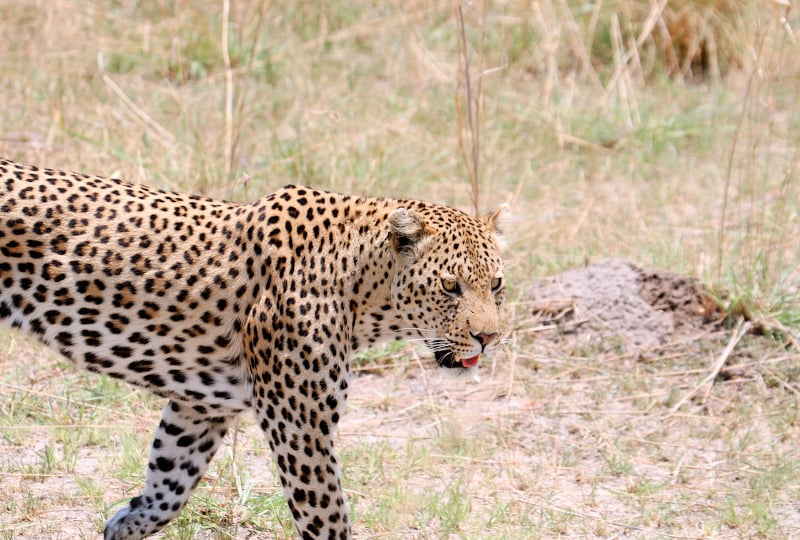
Leopard
Leopards (Panthera pardus) are solitary animals, except during the mating season or when females are accompanied by juveniles. They are primarily nocturnal creatures but have been seen in the daytime, particularly in national parks and in remote area.
Read more →Accommodation in Gondwana Namib Park
A place to rest, a place to wonder
An oasis for heart and soul where the only sound is the whispering wind. On the dunes. In the desert. Beneath a vast, star-strewn sky. Feet dipping into the cool water of the pool, a glass of wine in hand, and your mind filled with the memories of an extraordinary day
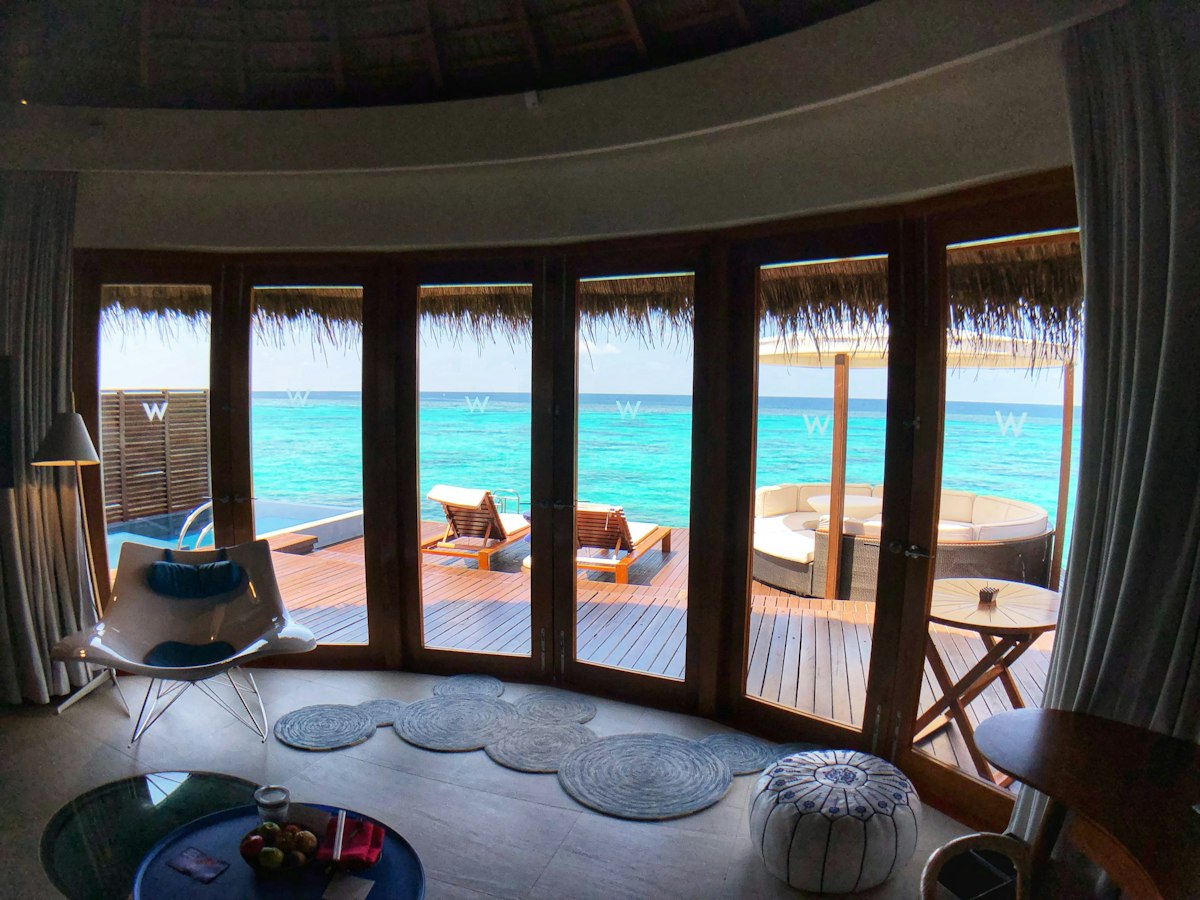
At Gondwana Namib Park, each accommodation experience offers a chance to pause, reflect, and reconnect with yourself and the desert. Choose between the Namib Dune Star Camp places you beneath a canopy of stars, Desert Whisper offers the luxury of solitude, a private retreat in the sweeping sandy sea
For elegance grounded in nature, the Namib Desert Lodge sits at the foot of ancient, petrified dunes. For those seeking even closer contact with the landscape, Namib Desert Camping2Go (self-catering) or the Namib Desert Campsite provide simple, immersive experiences under the open sky.
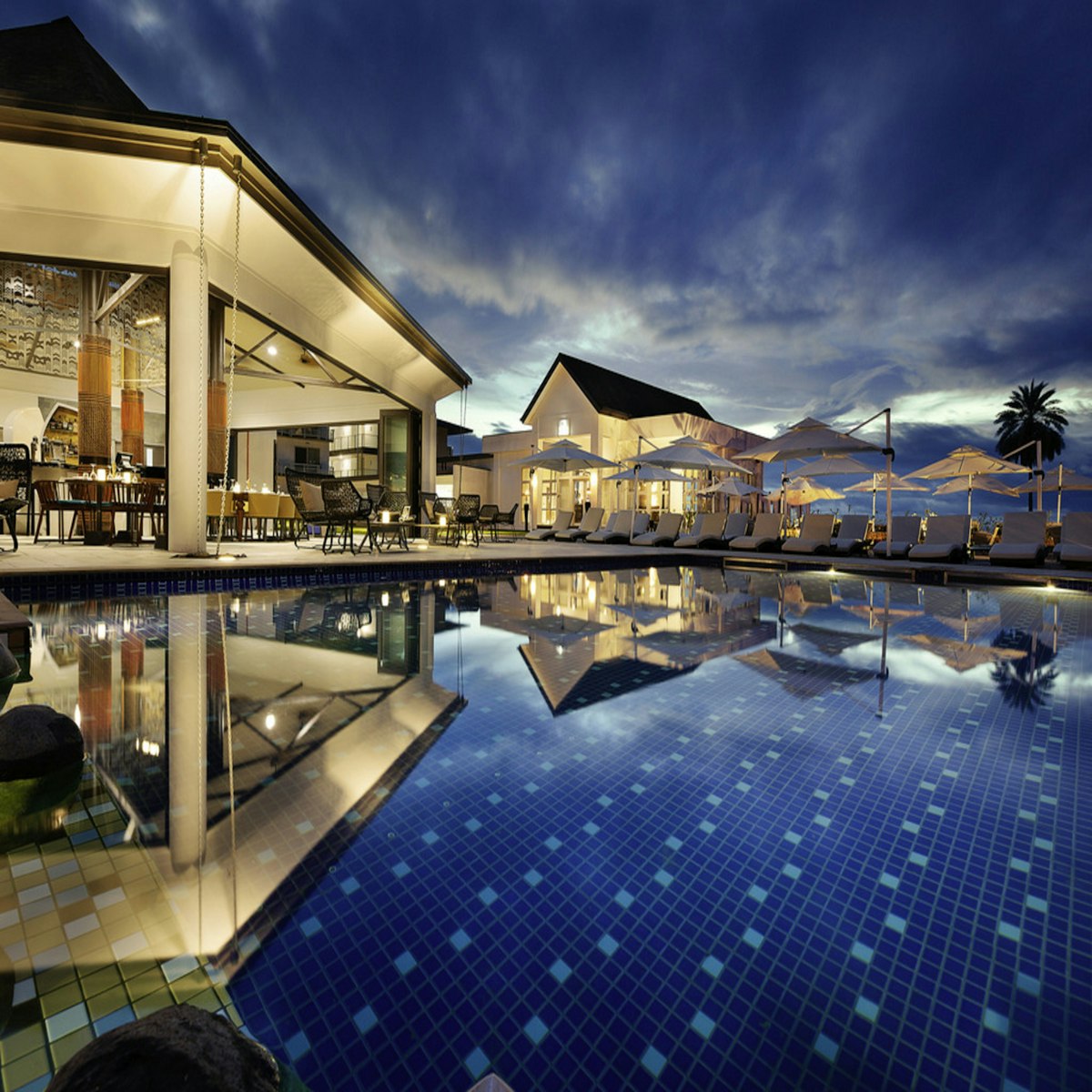
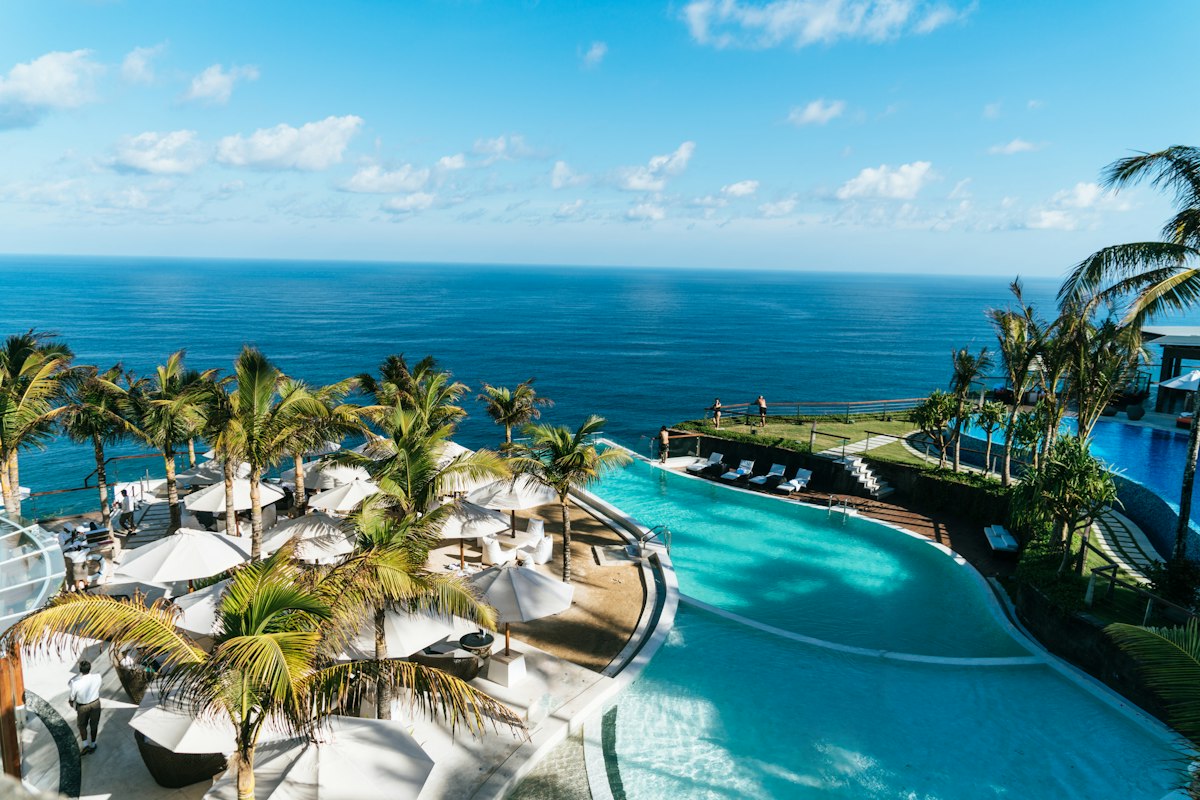
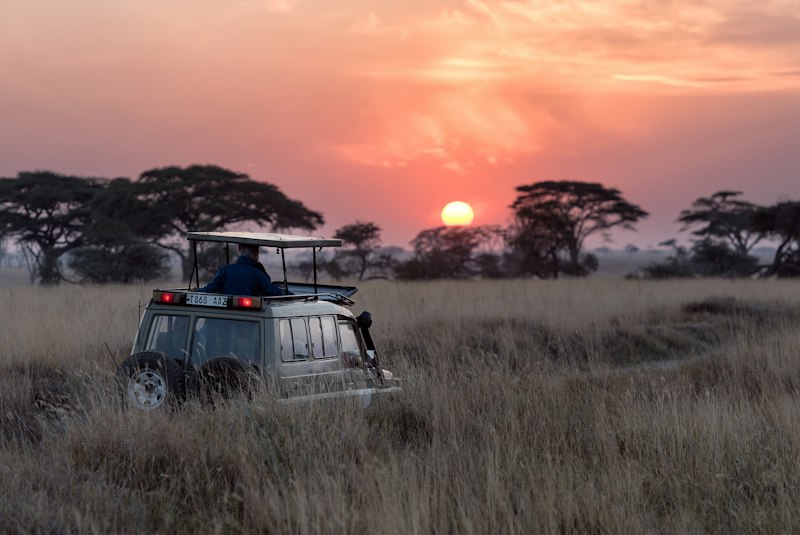
The Gondwana Namib Park
The Gondwana Namib Park was established in 2004, when Gondwana Collection Namibia acquired a local guest-farm. Over the years, additional land was purchased and fences were systematically removed – including those between neighbouring farms and the bordering Namib-Naukluft Park.
Read more
Sustainability Efforts
The Gondwana Namib Park safeguards one of the world's most sensitive desert ecosystems through a model that unites conservation and responsible tourism.
Read moreFrequently Asked Question
Free private parking is possible on site (reservation is not needed).
Information about predators in the area.
The camera is located at the coordinates: -24.074923, 15.887410
Information about the mineral lick.
Information about desert animal diets.
The waterhole is maintained by a solar-powered borehole system.
The waterhole is artificial, built in 2006 and maintained for wildlife.
Namibia Cam Merch
We are unique. We are passionate. We are Namibian. Most importantly we are Gondwana.

Mom & Baby Giraffe MUG
N$220.00 NAD

Mom & Baby Giraffe MUG
N$1045.00 NAD

Mom & Baby Giraffe MUG
N$60.00 NAD