Gondwana-Collection
Gondwana-Collection
  • Stay
    • Lodges & Camps
    • Accommodation Map
    • Stay Options
      • Luxury All-Inclusive Lodges
      • Exclusive Boutique Lodges 
      • Upscale Safari Lodges
      • Affordable Lodges & Hotels
      • Unique Desert & Nature Lodges
      • Self-Catering & Camping
  • Experiences
    • Destinations
    • Travel & Safaris
    • Adventure Travel
    • Business Travel
    • Travel Services
      • Car Rental
      • Shuttle Service
      • Travel Agency
      • Souvenir Shopping
  • Promotions
    • Special Offers
    • Gondwana Membership
  • Info Portals
    • News
    • Blog
    • Agent Portal/Media
    • Visa Info
    • FAQ
  • Company
    • About Gondwana
    • Investor Relations
    • Careers
    • Partners
    • Sustainability
    • Care Trust
  • Contact

    Our Commitment to Nature Conservation comes a long way

    Our Story SDGs Nature Water Energy Waste Green Practices Communities Stories

    Nature Conservation

    Gondwana’s Nature Conservation Roots Run Deep

    Since our founding in 1995, our commitment to nature conservation has come a long way. We understand that when nature thrives, so do our Namibian communities. Our lodges and their activities are designed to minimise environmental footprint and safeguard natural resources, all the while showcasing the diverse beauty of Namibian ecosystems and providing guests with experiences nothing short of heartfelt and enriching.

    Through our numerous conservation commitments, tailored to the unique landscapes which our properties operate in, we aim to give back to nature what belongs to nature. Journey with us as we commit to conservation through sustainable tourism and hospitality ventures, nourishing Namibia one story at a time.

    At a glance

    Conserving since
    1995
    Parks & concession areas
    6
    Land under stewardship
    7,395km²
    Gondwana Canyon Park
    116,000ha
    United Nations Sustainable Development Goal 15: Life on Land This work contributes to UN Sustainable Development Goal 15 — Life on Land.
    Our Story

    Stewards of Namibia’s nature: 1995 and beyond

    In the early 1990s, land surrounding the Fish River Canyon was overgrazed and stricken by drought, prompting farmers to sell their land in search of more promising farming opportunities. A group of Namibian businessmen sharing profound conservation ethos acquired one of these farms, with a vision to synergise tourism and conservation in the panoramic landscape of the Fish River Canyon.

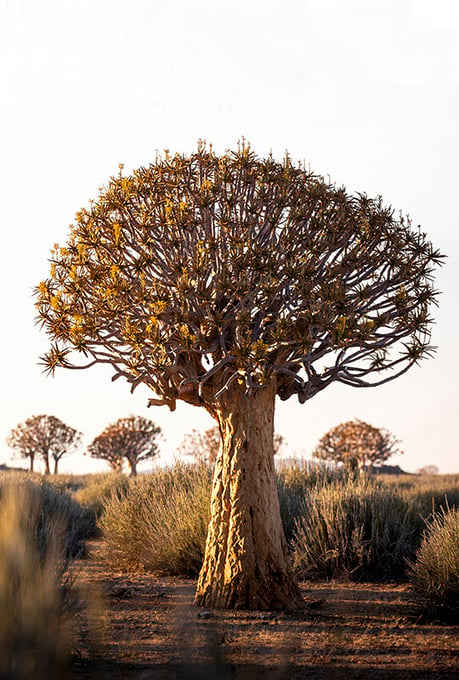
    Quiver tree in the Fish River Canyon area, southern Namibia

    In the years to follow, the vision of ecotourism, entwined with conservation, matured. Adjoining farms were acquired, and the concept of holistic landscape conservation ensued with the establishment of the Gondwana Canyon Park, which has grown to encompass a vast 1,160 km² (116,000 hectares).

    In efforts to re-wild the landscape following its revival, research was conducted to identify historical wildlife species suitable for re-introduction into the park. Red hartebeest, wildebeest, plains zebra and giraffe were gradually re-introduced, boosting landscape restoration as each species plays its essential part in maintaining ecosystems that will not merely function, but can thrive sustainably in the long term.

    Our commitment to conservation has further led to the establishment of what will be the world’s largest privately owned Black Rhino Sanctuary. A partnership between Gondwana Collection Namibia, ERP Namibia, and the Ministry of Environment, Forestry and Tourism, the sanctuary focuses on habitat protection, anti-poaching innovation, and community involvement to secure the future of one of Africa’s most endangered species.

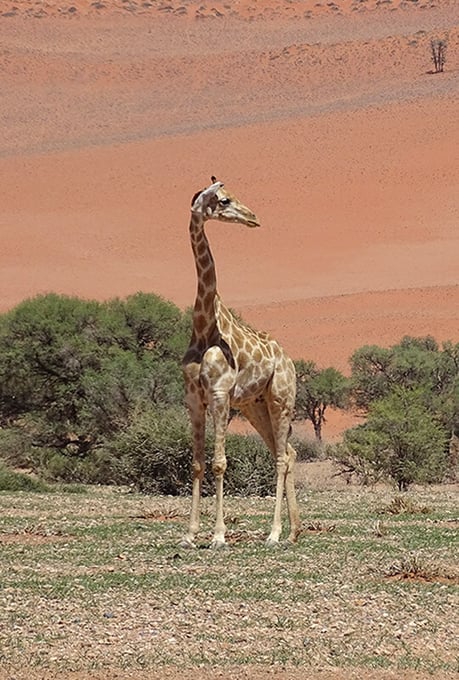
    Giraffe in one of Gondwana’s nature parks, Namibia
    Nature Parks

    Gondwana’s Nature Parks

    7,395km² Land under Gondwana stewardship across five parks and one concession area

    Gondwana’s initial conservation dream inspired the establishment of additional private nature parks across Namibia’s diverse landscapes, each managed according to the same concept: restore the veld, return the wildlife, and let responsible tourism pay for both.

    In 2019, Gondwana took on stewardship of the vast Palmwag Concession Area in Damaraland, north-western Namibia. Bordered by the Skeleton Coast National Park to the west and the Torra, Anabeb and Sesfontein conservancies to the north-east, it is a hub for some of Namibia’s most distinct biodiversity — desert-adapted rhino, elephant and lion. The area also holds over 100 lions, leopards, cheetahs and both brown and spotted hyenas: the largest carnivore populations outside Etosha National Park.

    • 5,500km²

      Palmwag Concession Area

      Damaraland, north-western Namibia

    • 1,160km²

      Gondwana Canyon Park

      Fish River Canyon, southern Namibia

    • 510km²

      Gondwana Sperrgebiet Rand Park

      Near Aus, in partnership with Klein-Aus Vista

    • 127km²

      Gondwana Namib Park

      North of Sesriem & Sossusvlei, Namib Desert

    • 98km²

      Gondwana Kalahari Park

      North-east of Mariental, Kalahari Desert

    Park ranger on patrol in Gondwana Canyon Park, Namibia
    Conservation in Practice

    Impact of our conservation work: Gondwana Canyon Park

    One of the core pillars of Gondwana’s Sustainability philosophy is the Planet. Our Environmental and Social Impact Department, together with the park management teams, implements and monitors conservation initiatives designed to minimise human footprint and maximise conservation impact — restoring and rewilding nature through eco-tourism activities while offering memorable guest experiences.

    The area that is now Gondwana Canyon Park has a history of intensive livestock farming, which resulted in the loss of wildlife species. A single farm was acquired in the 1990s to practise sustainable eco-tourism; that has since expanded to 116,000 hectares of protected area for ecosystem restoration.

    Annual rainfall here ranges from 50 to 200 mm and droughts run long, so the effects of climate change on the Fish River Canyon landscape are amplified — threatening water, grazing, wildlife populations and Namibia’s iconic quiver trees. Conservation work in the park covers three linked areas of management, each measured year on year.

    • Veld and vegetation

      Wildlife health is intricately linked to veld health. Each year, panoramic photographs are taken at 16 set photo points across the park and compared with previous years, giving a visual record of veld condition and ecosystem succession. Park teams also walk step-point transect lines to identify grass species and anticipate the grass biomass available to wildlife.

    • Water and boreholes

      Water for wildlife is supplied at waterholes drawing from underground sources. Borehole performance evaluations cover water testing, structural integrity, water levels and extraction rates to determine yield per hour — tracking usage over time so that adequate water remains available to wildlife while ecological thresholds are honoured.

    • Wildlife populations

      Annual game counts are run across all our parks, ideally in winter when sparse vegetation makes species easier to count and identify. Daily sightings are logged to show which areas wildlife prefer, and camera traps placed throughout the park assist with species identification, population estimates and rare sightings.

    Initiatives such as the Adopt-a-Quiver Tree project and the re-introduction of historically indigenous species promote ecosystem restoration. Arid ecosystems are uniquely sensitive, and lost species cause cascading effects on ecosystem health. By returning indigenous species, ecosystem integrity is restored — and an adaptive approach across veld, water and wildlife keeps those connections nurtured.

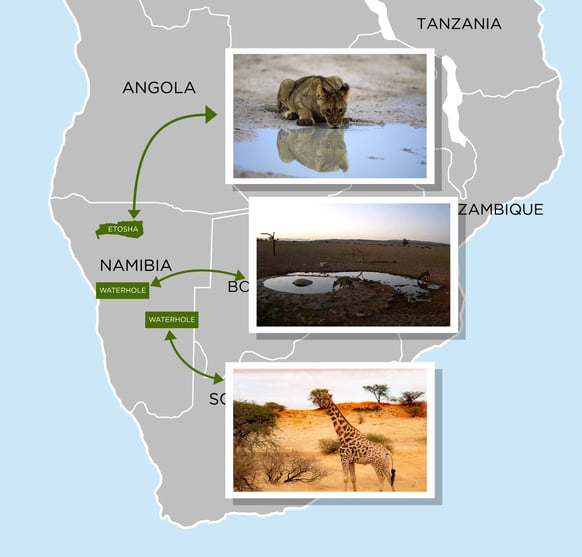
    Map of Namibia showing the locations of the Namibia Cam waterhole cameras
    Live from the Waterhole

    Namibia Cam

    Watch Namibia’s wildlife from wherever you are in the world. Our cameras stream around the clock from the Okaukuejo waterhole in Etosha and from waterholes in the Kalahari and Namib deserts. Gondwana’s YouTube channel is among the most popular wildlife live streams in Africa.

    Stories keep arriving from the NamCam community about the difference the cameras make — to children overseas, to terminally ill patients, to autistic children, even to an emergency rescue centre in San Francisco. The streams have inspired poetry and put a visit to Namibia on a great many bucket lists.

    • Okaukuejo waterhole, Etosha
    • Kalahari waterhole
    • Namib waterhole
    Watch the live streams

    Gallery

    Nature Conservation Map

    Our parks, concession areas and conservation projects across Namibia.

    Related Stories

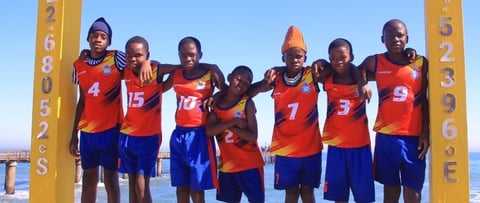
    Young athletes from the Jella Charity Volleyball Academy competing at the MTC Dome Youth Festival Tournament in Swakopmund after receiving travel support from Gondwana Care Trust and Namibia2Go.Gondwana Care Trust
    15 July 2026

    From Riverbeds to a National Stage: Supporting Young Volleyball Dreams

    At the Gondwana Care Trust, we believe that opportunity has the power to transform lives. Through meaningful ...

    Read More about From Riverbeds to a National Stage: Supporting Young Volleyball Dreams
    Dr Senorita Polster (Acting Chief Medical Officer, Windhoek Central Hospital)Gondwana Care Trust
    17 June 2026

    Steps2Walk programme: Every Step Creates Change

    What started as a passionate dream by Dr Mark Myerson, President and Founder of Steps2Walk, in 2011, has grown into a ...

    Read More about Steps2Walk programme: Every Step Creates Change
    Eduvision aims to provide equal opportunities Namibia's Youth
    24 August 2023

    Eduvision aims to provide equal opportunities Namibia's Youth

    The Gondwana Care Trust has supported a few new projects, and has received great support from various organisations ...

    Read More about Eduvision aims to provide equal opportunities Namibia's Youth
    first cooking training done by Women at Work
    24 August 2023

    School Projects that are supported by the Gondwana Care Trust

    The Gondwana Care Trust has been focusing on supporting as many school projects as possible. Here are a few of the ...

    Read More about School Projects that are supported by the Gondwana Care Trust
    Exciting projects & events receive support from Gondwana Care Trust
    30 June 2023

    Exciting projects & events receive support from Gondwana Care Trust

    Over the last 6 months, various exciting and new projects, as well as events in Namibia, have received support from the ...

    Read More about Exciting projects & events receive support from Gondwana Care Trust
    Gondwana Care Trust School Updates - June 2023
    30 June 2023

    Gondwana Care Trust School Updates - June 2023

    The schools supported by the Gondwana Care Trust, have been receiving donations and assistance from various ...

    Read More about Gondwana Care Trust School Updates - June 2023
    Gondwana-Collection-Logo-Footer-May-17-2021-09-28-10-34-AM

    General Ts & Cs 
    Privacy Policy & GDPR Compliance
    Disclaimer

    Follow us

    ©2026. Gondwana Collection Namibia.
    All rights reserved. 

    DESTINATIONS
    • Windhoek & Central
    • Kalahari
    • Aus Mountains & Wild Horses
    • Fish River Canyon
    • Sossusvlei & Namib Desert
    • Swakopmund & Atlantic Coast
    • Twyfelfontein & Damaraland
    • Epupa Falls & Kaokoland
    • Etosha National Park
    • Okavango River
    • Zambezi Region
    WHERE TO STAY
    • Luxury All-Inclusive Lodges
    • Exclusive Boutique Lodges 
    • Upscale Safari Lodges
    • Affordable Lodges & Hotels
    • Unique Desert & Nature Lodges
    • Camping & Self-Catering
    PLAN YOUR TRIP
    • Gondwana Travel Centre
    • Namibia2Go Car Rental
    • Go2 Tourism Shuttle
    • Travel Guide
    • Gondwana Membership
    • Affiliate Program